
Local Single: Chat & Friends
Local SingleSocial
4.55.36K Reviews
- Version
- 1.3.0
- Installs
- 500.00K
- Age Rating
- Mature 17+
Screenshots
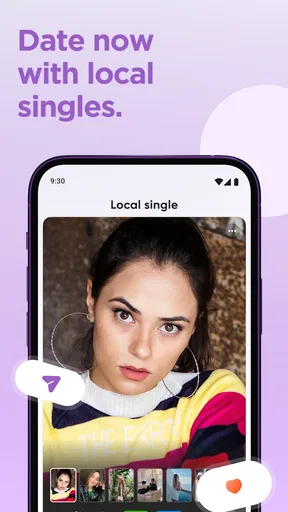
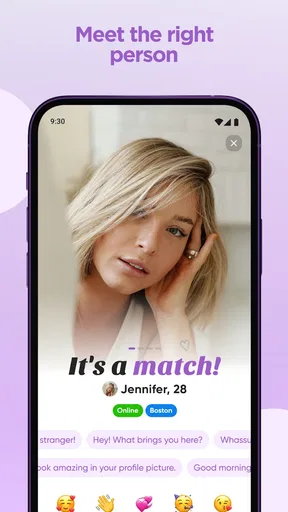
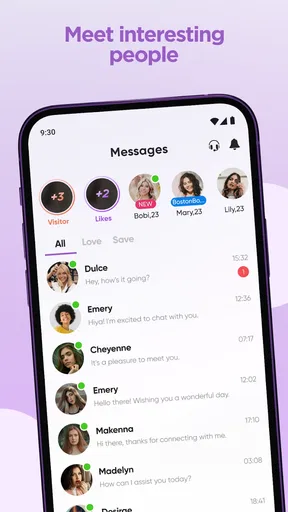
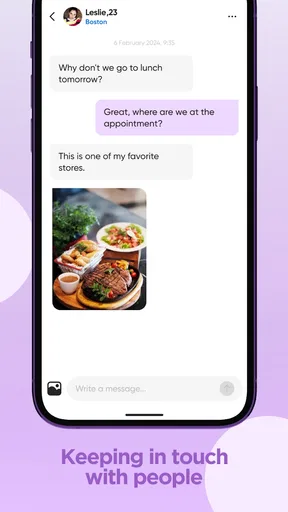
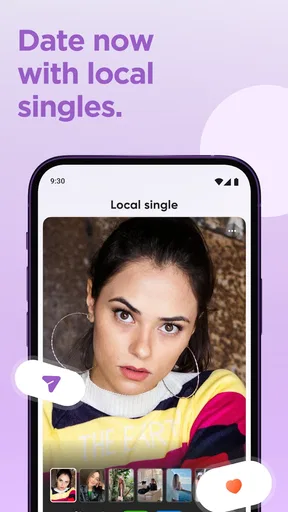
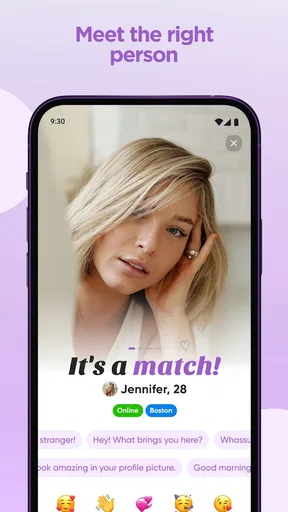
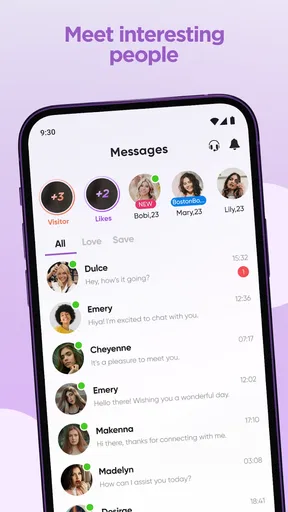
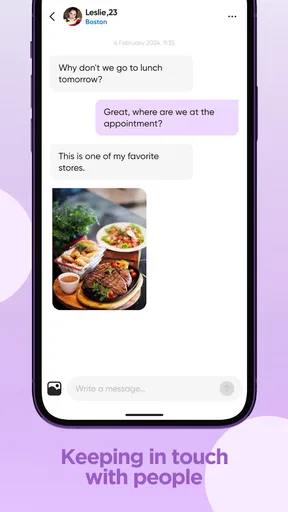
Our Review of Local Single: Chat & Friends
 Analysis by Appyee
I tried Local Single: Chat & Friends with a simple goal: move beyond the usual online social routine and see whether a locally focused app could make meeting people feel more relevant. The idea is easy to understand. Instead of placing the emphasis on a broad stream of strangers, it is built around making connections and friendships with people in your area. That changes the starting question from “Who is interesting anywhere?” to “Who might realistically become part of my everyday life?”
That distinction matters. A social app can show you plenty of profiles and still leave you with conversations that go nowhere. Local Single is more appealing when you want a connection that could eventually fit around your neighborhood, commute, hobbies, or regular routine. I would not treat it as a guaranteed shortcut to friendship, but I found its local focus useful for narrowing the search and setting more practical expectations.
From opening the app to finding a realistic connection
The app comes from Local Single and sits in the social category rather than presenting itself as a conventional messaging utility. It is free to install, with optional in-app purchases ranging from $3.99 to $99.99 per item. That makes it accessible for a first look, while also giving you a reason to pay attention to what is included before spending money. I would begin with the free experience and only consider a purchase after deciding whether the local community feels active enough for me.
Its audience is mature, with a 17+ content rating. That is an important part of the decision, not a detail to skim past. Anyone looking for a child-friendly social space should choose another type of app, and adults should still approach new conversations with ordinary online caution. A local connection can feel more immediate than a distant one, so I would avoid sharing an address, workplace schedule, or other identifying details early in a chat.
The app has built a visible user base, with more than 500 thousand installs, a 4.5 average rating, and roughly 52 thousand ratings. Those figures suggest that the concept has attracted substantial attention rather than being an empty experiment. They do not guarantee that I will find a good match in my own area, though. Local usefulness depends heavily on who is active nearby, which is why I would judge the app by the quality of available conversations instead of popularity alone.
My starting condition: wanting nearby people, not another endless feed
The best reason to open this app is a specific social problem. Perhaps I have moved to a new town, work remotely, spend too much time alone, or simply want to meet people whose lives overlap with mine geographically. In that situation, Local Single makes more sense than a general social network where location is secondary to public posting and follower counts.
I would also use it after deciding what kind of connection I actually want. “Friends” can mean casual conversation, activity partners, neighborhood acquaintances, or a deeper relationship. If I enter without any idea of what I am seeking, every profile can seem equally promising and every chat can drift. A useful first step is to choose one practical intention, such as finding someone to talk with after work or meeting people interested in local activities.
This is one of the app’s less obvious trade-offs: the local angle improves relevance, but it can also make a small pool feel more noticeable. On a large general platform, I can keep scrolling when a group does not suit me. In a location-centered service, I may see fewer suitable people and need more patience. That is not necessarily a flaw, but it means the app rewards realistic expectations more than constant browsing.
The step-by-step flow I would follow
I would begin by creating a profile that gives a potential contact something concrete to respond to. A short statement about the kind of people I hope to meet is more useful than a vague claim that I enjoy everything. Mentioning a preferred type of conversation or a general interest creates an opening without revealing too much personal information.
Next, I would browse with a filter in mind: not only whether someone seems appealing, but whether a conversation could naturally continue. A profile that suggests shared interests, a compatible pace of communication, or a similar reason for using the app is more valuable to me than a polished presentation with no conversational detail. This is where the local premise becomes practical. I am looking for a possible handoff from online chat to an ordinary social situation, not just a pleasant exchange that remains inside the app.
When I find someone interesting, I would send a message that refers to something specific rather than relying on a generic greeting. The goal is not to perform or oversell myself. It is to make replying easy. A question connected to a shared interest usually gives the other person more to work with than a simple request to chat.
After the first reply, I would avoid rushing into a meeting. A better workflow is to test consistency first: does the person answer thoughtfully, respect boundaries, and show interest in a two-way conversation? The local setting can tempt users to move quickly because meeting seems logistically simple. I think the safer and more comfortable approach is to let trust develop gradually.
One practical tip is to treat the first few messages as a sorting process, not a commitment. If the conversation becomes one-sided, repeatedly pushes for personal details, or ignores a clear boundary, I would end it without trying to rescue the interaction. The app’s value comes from helping me find suitable people, not from convincing me to continue every chat I start.
Where the handoffs matter
The first handoff is from browsing to conversation. This is where many social apps lose their usefulness: profiles may look interesting, but there is no natural bridge to a real exchange. With Local Single, I would make that bridge deliberately by referring to a visible interest or a shared local motivation. That small effort improves the chance that the chat becomes a conversation rather than a sequence of greetings.
The second handoff is from conversation to a more dependable connection. I would look for repeated signs of mutual effort rather than treating one enthusiastic exchange as proof of compatibility. For example, does the person remember what I said, ask questions back, and accept a slower pace? Those details matter more than how quickly a chat begins.
The third handoff is from the app to real life. This is where local discovery can become genuinely useful, but it is also where caution matters most. I would choose a busy public setting, tell someone I trust where I am going, and keep the first meeting short enough that leaving feels easy. A local app may reduce travel, but it does not remove the need for basic safety planning.
I would also keep the first meeting modest. A coffee, a walk in a public area, or a brief visit to a well-known venue creates a clear endpoint. Planning an entire day with a person I have only chatted with adds unnecessary pressure. If the interaction goes well, there will be opportunities to meet again.
A realistic everyday scenario
Imagine I have recently started working from home and notice that most of my social contact happens through screens. I open Local Single in the evening, create a profile that says I am interested in meeting nearby people for relaxed conversation and occasional activities, and browse for someone with a similar reason for being there.
I find a profile that suggests the person also wants to expand their local circle. Instead of sending a bare hello, I ask what kind of social plans they usually enjoy. The reply is friendly but brief, so I answer once and give the conversation room to develop. Over the next few exchanges, I notice whether the effort is balanced. If it is, I suggest a short public meet-up rather than moving straight to a private setting.
The outcome is not automatically a new best friend. A successful result might simply be discovering that the connection is not a fit, learning what kind of profile attracts better conversations, or meeting someone who becomes an occasional activity partner. That is a healthier way to judge a social app. The useful result is a credible next step, not a dramatic transformation after one session.
What feels different from the usual alternatives
Compared with a general social network, Local Single feels more focused because the purpose is closer to direct connection than public broadcasting. I do not need to build an audience, maintain a personal feed, or compete for attention through frequent posts. That can be refreshing if my priority is meeting people rather than performing a version of my life online.
Compared with a messaging app, it offers a more intentional starting point. A regular messenger is excellent once I already know someone, but it does not solve the discovery problem. Local Single is more relevant when I need to find the person first and establish a reason to talk.
Compared with a dating-first service, its friendship angle may suit people who do not want every interaction interpreted romantically. That said, anyone seeking a highly structured dating process may prefer a specialist platform with tools designed specifically for dating preferences. Local Single is a better fit when I want the possibility of friendship and local connection without making romance the only outcome.
The trade-off is depth versus breadth. A broad platform may provide more types of communities and more ways to interact, while this app’s appeal comes from keeping the idea of local connection near the center. I would choose it for relevance and simplicity, not for the largest possible range of social features.
How the current version fits into the experience
I reviewed the app as version 1.3.0, and it is available for devices running Android 6.0 or later. That relatively broad operating-system requirement makes it approachable for people who are not using a recent phone. Still, compatibility alone does not determine whether the experience feels right. The more important question is whether I can find active, respectful people close enough to make the local promise meaningful.
The app was released on May 28, 2024, so I would think of it as a comparatively young service rather than a long-established social institution. That can work in its favor: a newer community may feel less crowded by entrenched habits. It can also mean that activity varies more from one location to another. I would give it a fair trial during the times I am most likely to use it, then decide whether the available conversations justify returning.
The free entry point is helpful because I can test that question without paying immediately. The presence of purchases means I would be careful not to confuse extra spending with better social results. Paying may improve access to something in the app, but it cannot create chemistry, make another person reply, or turn an unsuitable local pool into a strong one. My advice is to identify the exact problem a purchase would solve before paying for it.
Where the flow breaks down
The biggest possible break occurs before the first message: there may simply be too few suitable people nearby at the moment I use it. A strong concept cannot overcome an inactive local audience. If browsing repeatedly produces profiles that do not match my goals, I would not force the experience. I would either return later or use a broader community platform alongside it.
Another weak point is the ambiguity of social intent. Even when the app is presented as a place for connections and friends, users can arrive with different expectations. One person may want casual conversation, another may want a serious relationship, and another may only be curious. I would make my own intentions clear early and ask direct but respectful questions before investing much time.
There is also a natural privacy tension. Local relevance is useful because it makes a meeting more realistic, but the same relevance can make personal details feel more sensitive. I would keep location information general, avoid posting routines that reveal when I am away from home, and move to a real-world meeting only after I feel comfortable with the person’s behavior. This is not a criticism unique to the app; it is a consequence of connecting online interaction with nearby life.
Finally, the app may not satisfy someone who wants a full community-management experience, long-form public discussion, or a specialized professional network. Its strength is the direct path from local discovery to personal conversation. If I want organized groups, expert communities, or a public content archive, another category of app would be more appropriate.
Who I would recommend it to
I would recommend Local Single to adults who want to widen their local circle and are willing to participate rather than wait passively for perfect connections. It is especially suitable for someone new to an area, someone whose routine has become isolated, or someone who prefers one-to-one conversations over public posting.
I would also recommend it to users who can handle a gradual process. The app is not a replacement for social effort. A thoughtful profile, a specific opening message, sensible boundaries, and patience all affect the result. People who enjoy discovering common ground and letting a connection develop naturally are more likely to appreciate it.
I would skip it if I need a tightly defined professional network, a child-friendly environment, or a platform where every interaction follows a specialized format. I would also look elsewhere if I am unwilling to share any general local context or if I expect instant results from a single session. The local premise only works when I am comfortable with the possibility of meeting people from the same broad area.
My final take after following the full workflow
Local Single has a clear and useful idea: make social discovery more practical by focusing on people who may actually be nearby. I like that its purpose can lead from profile to conversation and, when the situation feels right, to an ordinary real-world meeting. That path is more grounded than collecting distant contacts who never become part of my life.
My recommendation comes with conditions. I would start free, protect personal information, judge conversations by mutual effort, and avoid paying until I understand what an optional purchase would add. I would also give the local community time to prove itself instead of assuming that a strong overall rating guarantees an active pool in my area.
With a 4.5 average from around 52 thousand ratings and more than 500 thousand installs, the app has enough visibility to deserve a serious look. For me, its real test is simpler: can it help turn a vague wish for more local connection into one respectful, realistic conversation? If that is your starting condition, and you are prepared for the occasional empty search or awkward handoff, this free social app is worth trying.
Verdict
Strengths of Local Single: Chat & Friends
- Easy way to meet nearby people with similar interests.
- Chat features make starting conversations simple and direct.
- Useful for expanding your social circle in a new area.
- Profile-based discovery helps users find compatible connections.
- Available on mobile, making social interaction convenient anywhere.
Limitations of Local Single: Chat & Friends
- Some features may require payment or in-app purchases.
- User activity can vary greatly depending on your location.
- Privacy concerns may arise when sharing personal information.
- Not every profile may be genuine or actively maintained.
- Meeting strangers requires caution and responsible safety practices.
Similar Picks in This Category
View All
Meta Platforms, Inc.4.6

Instagram4.0

Likee-Live, Chat & Party Games
Likeme Pte. Ltd.4.4

Facebook Lite
Meta Platforms, Inc.4.5

TikTok - Videos, Shop & LIVE
TikTok Pte. Ltd.4.0

Moj: Free Short Drama & Reels
ShareChat4.1
Frequently Asked Questions
What is Local Single: Chat & Friends, and who is it designed for?
Local Single: Chat & Friends is a social and dating-style app designed to help people discover and communicate with other users nearby. It can be useful for singles who want to meet new people, start conversations, or potentially find friendship and romantic connections in their local area. The experience generally depends on the number of active users near you and the information you choose to share on your profile.
How does Local Single: Chat & Friends help users meet people nearby?
After creating a profile, users can typically browse or discover other members based on location and available preferences. The app may present profiles, matching tools, chat functions, or other social features that encourage interaction. Results can vary considerably depending on your city, age range, interests, and activity level, so users in smaller communities may see fewer profiles than those in larger urban areas.
Is Local Single: Chat & Friends free to download and use?
The application may be available to download at no initial cost, but some features can require in-app purchases, subscriptions, credits, or other paid upgrades. Before registering or starting a conversation, check the current store listing and the app’s payment screens carefully. Pay attention to subscription duration, renewal terms, cancellation instructions, and whether messaging or profile visibility is limited for free users.
What privacy and safety precautions should I take when using the app?
Because the app involves meeting and chatting with people online, avoid sharing your home address, workplace, financial details, passwords, or private documents. Use the built-in reporting and blocking tools whenever available, and be cautious of profiles requesting money or pressuring you to move conversations elsewhere. If you meet someone in person, choose a public place and tell a trusted contact about your plans.
What should I do if I cannot find many suitable people or receive messages?
The quality of your experience can depend heavily on your location and the number of active members nearby. Improve your chances by using clear, recent photos, writing an honest profile description, and selecting realistic preferences. Remain patient and avoid sending repeated messages. If the app offers discovery settings, review your distance, age, and interest filters, since restrictive options may significantly reduce the profiles shown.
